
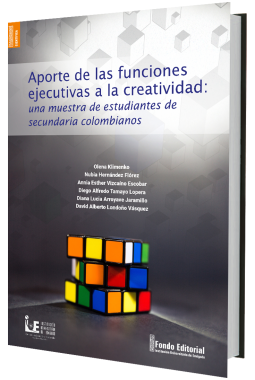
Aporte de las funciones ejecutivas a la creatividad: una muestra de estudiantes de secundaria colombianos
Palabras clave:
funciones ejecutivas, creatividad, estrategias de mediacion cognitiva, pedagogia de creatividad, habilidades del siglo XXISinopsis
Considerando el hecho de que los estudiantes colombianos vienen ocupando sistemáticamente los últimos puestos en las pruebas internacionales de PISA y la apremiante necesidad de avanzar en la dirección de transformaciones educativas a nivel nacional, la investigación que desarrolla este libro presenta interesantes e importantes hallazgos que permiten profundizar en la comprensión de las funciones cognitivas y metacognitivas, que aportan al desarrollo del pensamiento creativo en los estudiantes, permitiendo orientar la atención de los docentes a la comprensión de aspectos claves en sus prácticas de enseñanza, para poder formar pensadores creativos y críticos.
Biografía del autor/a
Dra. Olena Klimenko, Institución Universitaria de Envigado
Psicóloga de la Universidad Estatal Lomonosov (Rusia). Magíster en Ciencias Sociales Universidad de Antioquia. Doctora en psicología educativa, Altanic International University. Doctora en Psicopedagogía de la Universidad Católica de Argentina.
Dra. Nubia Hernandez-Florez, Universidad Sergio Arboleda
Psicóloga Universidad de Pamplona (España). Máster en Gestión de la Calidad de la Universidad Católica de Valencia (España). Máster en Avances en Investigación, tratamientos en psicopatología y Salud Mental de la Universidad de Valencia España. Doctora en Ciencias de la Educación de la Universidad Cuauhtémoc (México).
Dra. Annia Esther Vizcaíno-Escobar, Universidad Central Marta Abreu de Las Villas, Cuba
Licenciada en Psicología, Máster en Psicopedagogía, Doctora en Ciencias Psicológicas, Universidad Central Marta Abreu de Las Villas, Cuba. Coordinadora del Programa de Doctorado en Ciencias Psicológicas. Directora del Departamento Psicología Educativa y del Desarrollo, Universidad Central Marta Abreu de Las Villas, Cuba.
Mgs. Diego Alfredo Tamayo-Lopera, Institución Universitaria de Envigado
Psicólogo Universidad de San Buenaventura, Especialista en terapia cognitiva, Universidad de San Buenaventura, Magister en Neuropsicología de la Universidad de San Buenaventura.
Mgs. Diana Lucia Arroyave-Jaramillo, Institución Universitaria de Envigado
Psicóloga, Institución Universitaria de Envigado; Especialista en neurodesarrollo y aprendizaje, Universidad CES; Magister en salud mental de la infancia y la adolescencia, Universidad CES.
Dr. David Alberto Londoño-Vásquez, Institución Universitaria de Envigado
Traductor Inglés-Francés-Español, Universidad de Antioquia, Colombia; Magíster en Lingüística, Universidad de Antioquia, Colombia; Doctor en Ciencias Sociales, Niñez y Juventud, Universidad de Manizales, Colombia.
Referencias bibliográficas
Ababa Almasco, M.A. (2023). 21st century skills: Teachers’ integration in face-to-face instruction. World Journal of Advanced Research and Reviews, 19(01), 315–333, https://doi.org/10.30574/wjarr.2023.19.1.1316
Abdivarmazan, M., Taghizade, M., Mahmoudfakhe, H., Tosang, M., Boromand, N. (2014). A study of the efficacy of meta cognitive strategies on creativity and self-confidence and approaching problem solving among the third-grade junior school students of the city of Rey. European Journal of Experimental Biology, 4(2):155-158, http://www.imedpub.com/articles/a-study-of-the-efficacy-of-meta-cognitive-strategies-on-creativity-and-selfconfidence-and-approaching-problem-solving-among-the-th.pdf
Abuhamdeh, S. (2020). Investigating the “Flow” Experience: Key Conceptual and Operational Issues. Frontiers in Psychology, 11(February), 1–13. https://doi.org/10.3389/fpsyg.2020.00158
Abín, A., García, T., & Rodríguez, C. (2023). Relationship between Executive Functions and Creativity in Children and Adolescents: A Systematic Review. Children (Basel), 10(6), 1002-1002. https://doi.org/10.3390/children10061002
Abraham, A. (2019). The neuropsychology of creativity. Current Opinion in Behavioral Sciences, 27, 71–76. https://doi.org/10.1016/j.cobeha.2018.09.011
Adnan, A., Beaty, R., Lam, J., Spreng, R. N., & Turner, G. R. (2019). Intrinsic default-executive coupling of the creative aging brain. Social cognitive and affective neuroscience, 14(3), 291–303. https://doi.org/10.1093/scan/nsz013
Akhutina, T. (2002). L.S. Vigotsky y A. R. Luria: la formación de neuropsicología. Revista española de neuropsicología, 4(2-3), 108-129, https://marxismocritico.files.wordpress.com/2011/10/tatiana_v-_akhutina.pdf
Akpur, U. (2023). Creativity and Academic Achievement: A Meta-Analysis Study Article. European Scientific Journal, ESJ, 18, 370. https://eujournal.org/index.php/esj/article/view/16869
Akpur, U. (2020). Critical, Reflective, Creative Thinking and Their Reflections on Academic Achievement. Thinking Skills and Creativity, 37(May). https://doi.org/10.1016/j.tsc.2020.100683
Álamos-Gómez, J., & Montes Anguita, R. (2022). Creatividad y Aprendizaje Colaborativo En Educación Secundaria. Revista Mexicana de Investigacion Educativa, 27(92), 155–183. https://www.scielo.org.mx/scielo.php?pid=S1405-66662022000100155&script=sci_abstract
Ardila, A., Rosselli, M., Matute, E., & Guajardo, S. (2005). The influence of the parents' educational level on the development of executive functions. Developmental neuropsychology, 28(1), 539–560. https://doi.org/10.1207/s15326942dn2801_5
Ardila, A. (2013). Función Ejecutiva [fundamentos y evaluación]. https://aalfredoardila.wordpress.com/wp-content/uploads/2013/07/2013-ardila-funcic3b3n-ejecutiva-fundamentos-y-evaluacic3b3n.pdf
Ardila, A. (2019). Executive functions brain functional system. In A. Ardila, S. Fatima, & M. Rosselli (Eds.), Dysexecutive syndromes: Clinical and experimental perspectives (pp. 29–41). Springer Nature Switzerland AG. https://doi.org/10.1007/978-3-030-25077-5_2
Arkin, C., Przysinda, E., Pfeifer, C. W., Zeng, T., & Loui, P. (2019). Gray matter correlates of creativity in musical improvisation. Frontiers in Human Neuroscience, 13(May), 1–10. https://doi.org/10.3389/fnhum.2019.00169
Arrieta Flórez, Y.J. (2024). Desarrollo de habilidades del pensamiento creativo en estudiantes de secundaria. Gaceta de pedagogía, (48), 156–171. https://doi.org/10.56219/rgp.vi48.2446
Artola, T., Barraca, J., Martín-Azañedo, C., Mosteiro, P., Ancillo, I., Poveda, B. (2008). PIC-J. Prueba de Imaginación Creativa para Jóvenes. Madrid: TEA Ediciones.
Archana, R., Johnson, W.M.S., Sai Kumar, P. (2014). N-back task to assess sex difference in working memory: A pilot study. Research Journal of Pharmaceutical Biological and Chemical Sciences. Research Journal of Pharmaceutical Biological and Chemical Sciences, 5(5):1472-1476, https://www.researchgate.net/publication/287278868_N_-back_task_to_assess_sex_difference_in_working_memory_A_pilot_study
Ashby, F. G., Isen, A. M., & Turken, A. U. (1999). A neuropsychological theory of positive affect and its influence on cognition. Psychological review, 106(3), 529–550. https://doi.org/10.1037/0033-295x.106.3.529
Ashby, F.G.., Valentin, V.V., & Turken, A.U. (2002). The effects of positive affect and arousal on working memory and executive attention. In In S. Moore & M. Oaksford (Eds.), Emotional Cognition: From Brain to Behaviour (pp. 245-287). Amsterdam: John Benjamins. https://labs.psych.ucsb.edu/ashby/gregory/sites/labs.psych.ucsb.edu.ashby.gregory/files/pubs/ashbyvalentinturken2002.pdf
Ayasrah, S., Obeidat, M., Katatbeh, Q., Aljarrah, A., & Al-Akhras, M.-A. (2023). Practicing creative thinking and its relation to academic achievement. Creativity Studies, 16(1), 178–192. https://doi.org/10.3846/cs.2023.14661
Ayyildiz, P., & Yilmaz, A. (2021). ‘Moving the Kaleidoscope’ to see the effect of creative personality traits on creative thinking dispositions of preservice teachers: The mediating effect of creative learning environments and teachers’ creativity fostering behavior. Thinking Skills and Creativity, 41(May), 100879. https://doi.org/10.1016/j.tsc.2021.100879
Baddeley, A. D., & Hitch, G. J. (1994). Developments in the concept of working memory. Neuropsychology, 8(4), 485–493, https://api.semanticscholar.org/CorpusID:144930965
Baer, J., & Kaufman, J.C. (2008). Gender Differences in Creativity. The Journal of Creative Behavior, 42, 75-105. https://doi.org/10.1002/j.2162-6057.2008.tb01289.x
Barraza, P., & Rodríguez, E. (2023). Executive Functions and Theory of Mind in Teachers and Non-Teachers. Heliyon, 9(9), e19915. https://doi.org/10.1016/j.heliyon.2023.e19915
Barrett, K. C., & Limb, C. J. (2019). Unveiling artistic minds: case studies of creativity. Current Opinion in Behavioral Sciences, 27, 84–89. https://doi.org/10.1016/j.cobeha.2018.09.005
Bartlett, K.A., Camba, J.D. (2023). Gender Differences in Spatial Ability: a Critical Review. Educ Psychol Rev 35, 8. https://doi.org/10.1007/s10648-023-09728-2
Bechara, A., Tranel, D., Damasio, H., Damasio, A.R. (1996). Failure to Respond Autonomically to Anticipated Future Outcomes Following Damage to Prefrontal Cortex. Cerebral Cortex, 6 (2), 215–225, https://doi.org/10.1093/cercor/6.2.215
Bekhtereva, N.P., Starchenko, M.G., Klyucharev, V.A., Vorobiev, V. A., Pakhomov, S. V. & Medvedev, S. V. (2000). Study of the brain organization of creativity: II. Positron-emission tomography data. Hum Physiol 26, 516–522, https://doi.org/10.1007/BF02760367
Belkacem, A. N., Kiso, K., Uokawa, E., Goto, T., Yorifuji, S., & Hirata, M. (2020). Neural Processing Mechanism of Mental Calculation Based on Cerebral Oscillatory Changes: A Comparison Between Abacus Experts and Novices. Frontiers in human neuroscience, 14, 137. https://doi.org/10.3389/fnhum.2020.00137
Beltrán, L. (2020). Análisis del proceso creativo en estudiantes de noveno grado con una estrategia didáctica basada en la experimentación sonora con herramientas digitales de audio. [Trabajo de Grado], Universidad Auntónoma de Bucaramanga. http://hdl.handle.net/20.500.12749/12472
Benedek, M., Jauk, E., Fink, A., Koschutnig, K., Reishofer, G., Ebner, F., & Neubauer, A. C. (2014). To create or to recall? Neural mechanisms underlying the generation of creative new ideas. NeuroImage, 88, 125–133. https://doi.org/10.1016/j.neuroimage.2013.11.021
Berrio Peña, A. (2023). Reflexiones pedagógicas sobre la enseñanza de la filosofía en Colombia. Sophia, 19(1). https://doi.org/10.18634/sophiaj.19v.1i.1245
Bibok, M. B., Carpendale, J. I., & Müller, U. (2009). Parental scaffolding and the development of executive function. New directions for child and adolescent development, (123), 17–34. https://doi.org/10.1002/cd.233
Boghi, A., Rasetti,R., Avidano, F., Manzone, C., Orsi, L., D'Agata, F., Caroppo, P., Bergui, M., Rocca, P., Pulvirenti, L., Bradac, G.B., Bogetto, F., Mutani, R., Mortara, P. (2006). The effect of gender on planning: An fMRI study using the Tower of London task, NeuroImage, 33 (3), 999-1010, https://doi.org/10.1016/j.neuroimage.2006.07.022.
Bölen, M. C., Calisir, H., & Özen, Ü. (2021). Flow theory in the information systems life cycle: The state of the art and future research agenda. International Journal of Consumer Studies, 45(4), 546–580. https://doi.org/10.1111/ijcs.12641
Border, S., Woodward, C., Kurn, O., Birchall, C., Laurayne, H., Anbu, D., Taylor, C., & Hall, S. (2021). Working in Creative Partnership with Students to Co-Produce Neuroanatomy e-Learning Resources in a New Era of Blended Learning. Anatomical Sciences Education, 14(4), 417–425. https://doi.org/10.1002/ase.2090
Boroditsky, L. (2004). Relatividad lingüística. https://www.um.es/langpsy/Docencia/Lenguaje/Materiales/Relatividadlinguistica.pdf
Богоявленская Д.Б. (2023). Проблемы методологии развития творчества в практике образования. Культурно-историческая психология. 19 (3), 56–63. https://doi.org/10.17759/chp.2023190307
Bridges, D., & Schendan, H. E. (2019). Sensitive individuals are more creative. Personality and Individual Differences, 142(February), 186–195. https://doi.org/10.1016/j.paid.2018.09.015
Brown, S., & Kim, E. (2021). The neural basis of creative production: A cross-modal ALE meta-analysis. Open Psychology, 3 (1), 103-132. https://doi.org/10.1515/psych-2020-0114
Bruns, B., Luque, J. (2014). Profesores excelentes. Cómo mejorar el aprendizaje en América Latina y el Caribe. Washington: Grupo del Banco Mundial. Disponible en http://www.bancomundial.org/content/dam/Worldbank/Highlights%20&%20Features/lac/LC5/Spanish-excellent-teachers-report.pdf
Bustos, D.N., Arán Filippetti, V., Krumm, G.L (2013). Creatividad, funciones ejecutivas e inteligencia: un estudio en niños de habla hispana. https://www.researchgate.net/profile/Gabriela-Krumm-2/publication/264762108_Creatividad_funciones_ejecutivas_e_inteligencia_un_estudio_en_adolescentes_de_habla_hispana/links/576560ba08ae1658e2f4a4a8/Creatividad-funciones-ejecutivas-e-inteligencia-un-estudio-en-adolescentes-de-habla-hispana.pdf
Bustos Mora, J. S., y Castiblanco Abril, O. L. (2023). El Desarrollo de la Creatividad en Cuarto de Primaria a partir del Aprendizaje de la Física. Góndola, Enseñanza y Aprendizaje de las Ciencias, 18(Especial), 206–222. https://doi.org/10.14483/23464712.21369
Burbaud, P., Camus, O., Guehl, D., Bioulac, B., Caillé, J.M., & Allard, M. (2000). Influence of cognitive strategies on the pattern of cortical activation during mental subtraction. A functional imaging study in human subjects, Neuroscience Letters, 287 (1), 76-80, https://doi.org/10.1016/S0304-3940(00)01099-5.
Caballero, A., Fernández, M. (2018). Creatividad y rendimiento académico: un estudio de caso con alumnos de 4º curso de educación secundaria. Revista Iberoamericana de Educación. 78 (2), 77-95, https://rieoei.org/RIE/article/view/3203/3989
Caballero-García, P.A., & Sánchez-Ruiz, S. (2021). Creativity and Life Satisfaction in Spanish University Students. Effects of an Emotionally Positive and Creative Program. Front. Psychol. 12:746154. https://doi.org/10.3389/fpsyg.2021.746154
Caldera Ortiz, J. J., Llamas-Salguero, F., & López-Fernández, V. (2018). Neuropsicología y educación: Creatividad, inteligencias múltiples y rendimiento académico en Educación primaria. Enseñanza & Teaching: Revista Interuniversitaria De Didáctica, 36(2), 123–143. https://doi.org/10.14201/et2018362123143
Cancer, A., Iannello, P., Salvi, C. & Antonietti, A. (2023). Executive functioning and divergent thinking predict creative problem-solving in young adults and elderlies. Psychological Research 87, 388–396. https://doi.org/10.1007/s00426-022-01678-8
Cantú-Cervantes, D., Baca-Pumarejo, J. R., Amaya-Amaya, A., & Lera-Mejía, J. A. (2019). Un estudio sobre creatividad figurativa no verbal por la activación motora de la mano izquierda. Revista de Psicología y Ciencias Del Comportamiento de La Unidad Académica de Ciencias Jurídicas y Sociales, 10(1), 18–31. https://doi.org/10.29059/rpcc.20190602-78
Castro Paniagua, W.G., & Oseda Gago, D. (2017). Estudio de estrategias cognitivas, metacognitivas y socioemocionales: Su efecto en estudiantes, Opción, 33 (84), 557-576, https://www.redalyc.org/pdf/310/31054991020.pdf
Carranza, M. (2019). Pensamiento creativo: Un estudio holistico en la educación. Revista Innova Educación, 1(2), 197–210. https://revistainnovaeducacion.com/index.php/rie/article/view/29
Castro, H., Ortega, J., Villarroel, J., & Contreras, C. (2019). Determinación de pensamiento creativo en estudiantes de medicina de una universidad chilena. Revista Médica de Chile, 147(3), 372–377. https://doi.org/10.4067/s0034-98872019000300372
Çetinkaya, Ç. (2023). The Relationship Between Intelligence and Creativity Within the Threshold Theory Among Gifted and Bright Secondary School Students in Turkey. Sage Open, 13(4). https://doi.org/10.1177/21582440231206612
Chen, Q., Beaty, R. E., & Qiu, J. (2020). Mapping the artistic brain: Common and distinct neural activations associated with musical, drawing, and literary creativity. Human Brain Mapping, 41(12), 3403–3419. https://doi.org/10.1002/hbm.25025
Chrysikou, E. G., Wertz, C., Yaden, D. B., Kaufman, S. B., Bacon, D., Wintering, N. A., Jung, R. E., & Newberg, A. B. (2020). Differences in brain morphometry associated with creative performance in high- and average-creative achievers. NeuroImage, 218(May), 116921. https://doi.org/10.1016/j.neuroimage.2020.116921
Cifuentes, P.-A. & Marín-Gutiérrez, A. (2024). Relationship between Executive Functions and the Curriculum: A Systematic Review. Cultura, Educación y Sociedad, 15(1), e03434984. http://dx.doi.org/10.17981/cultedusoc.15.1.2024.4984.
Coello-Zambrano, E., & Ramos-Galarza, C. (2022). Construcción Teórica Neuropsicológica de las Funciones Ejecutivas. Revista Ecuatoriana de Neurología, 31 (2), 74-83, https://doi.org/10.46997/revecuatneurol31200074
Conradty, C., Sotiriou, S., & Bogner, F. (2020). How creativity in STEAM Modules intervenes with self-Efficacy and motivation. Education Sciences, 10 (3), 70, https://doi.org/10.3390/educsci10030070
Cortada de Kohan, N. (2004). BAIRES, Test de aptitud verbal “Buenos Aires”. Madrid: TEA Ediciones.
Crenshaw, K.C., & Miller, S.E. (2021). Creativity and Executive Function in School-Age Children: Effects of Creative Coloring and Individual Creativity on an Executive Function Sorting Task. Psi Chi Journal of Psychological Research, 27(1):81-90. https://doi.org/10.24839/2325-7342.jn27.1.81
Csikszentmihalyi, M. (1999). 16 Implications of a systems perspective for the study of creativity. In Handbook of Creativity; Sternberg, R., Ed.; Cambridge University Press: Cambridge, pp. 313–335.
Csikszentmihalyi, M. (1988). Society, culture, and person: A systems view of creativity. In R. J. Sternberg (Ed.), The nature of creativity: Contemporary psychological perspectives. New York: Cambridge University Press., 01(03), 1–339. https://doi.org/10.4236/ce.2010.13026
Csikszentmihalyi, M. (1998). Creatividad. El fluir y la psicología del descubrimiento y la invención. Barcelona: Paidós Transiciones
Csizmadia, P., Nagy, B., Kővári,L., Gaál,Z.A. (2024). Exploring the role of working memory gate opening process in creativity: An ERP study using the reference-back paradigm, Biological Psychology, 187, 108765, https://doi.org/10.1016/j.biopsycho.2024.108765.
Султанова А.Н. (2024). Влияние детско-родительских отношений в формировании копинг-стратегий во взрослом возрасте. Международный научно-исследовательский журнал. 2 (140), https://doi.org/10.23670/IRJ.2024.140.14
Damasio, A. R. (1998a). Emotion in the perspective of an integrated nervous system. Brain Research Reviews, 26(2-3), 83–86. https://doi.org/10.1016/S0165-0173(97)00064-7
Damasio, A. R. (1998). Emotion and reason in the future of human life. In B. Cartledge (Ed.), Mind, brain, and the environment: The Linacre Lectures 1995–6 (pp. 57–71). Oxford University Press.
Damasio, A.R. (2001). Emotion and the Human Brain. Annals of the New York Academy of Sciences, 935: 101-106. https://doi.org/10.1111/j.1749-6632.2001.tb03475.x
Danesh, M., Nourdad, N. (2017). On the Relationship between Creative Problem-Solving Skill and EFL Reading Comprehension Ability. Theory and Practice in Language Studies, 7 (3), 234-240, DOI: http://dx.doi.org/10.17507/tpls.0703.10
Delgado, C. (2021). Didactic strategies to strengthen creative thinking in the classroom. A meta-analytic study. Revista Innova Educación, 4(1), 51–64. https://doi.org/10.35622/j.rie.2022.01.004.en
Del-Valle, M. V., Canet-Juric, L., Zamora, E. V., Andrés, M. L., and Urquijo, S. (2024). Executive Functions and Their Relation to Academic Performance in University Students. Psicología Educativa, 30(1), 47 - 55. https://doi.org/10.5093/psed2024a2
De Dreu, C., Nijstad, B., Baas, M., Wolsink, I., Roskes, M. (2012). Working memory benefits creative insight, musical improvisation, and original ideation through maintained task-focused attention. Personality and Social Psychology Bulletin, 38 (5), 656-669, doi: https://doi.org/10.1177/0146167211435795
De la Torre, S. (2003). Dialogando con la creatividad. De la idendificación a la creatividad paradójica. Barcelona: Octaedro
De la Torre, S., & Violant, V. (2006). Comprender y evaluar la creatividad. Madrid: Aljibe Ediciones.
Diamond, A (2020). Chapter 19 - Executive functions, In Editor(s): Anne Gallagher, Christine Bulteau, David Cohen, Jacques L. Michaud, Handbook of Clinical Neurology, Elsevier, Vol. 173, 225-240, https://doi.org/10.1016/B978-0-444-64150-2.00020-4.
Díaz, A., Martín, R., Jiménez, J., García, E., Hernández, S., y Rodríguez, C. (2012). Torre de Hanoi: datos normativos y desarrollo evolutivo de la planificación. European Journal of Education and Psychology, 5(1), 79-91, https://www.redalyc.org/pdf/1293/129324775007.pdf
Diaz, V., & Justel, N. (2019). Creativity. A descriptive review of our invention and innovation capacity. Revista CES Psicologia, 12(3), 35–49. https://doi.org/10.21615/CESP.12.3.3
Dietrich A. (2003). Functional neuroanatomy of altered states of consciousness: the transient hypofrontality hypothesis. Consciousness and cognition, 12(2), 231–256. https://doi.org/10.1016/s1053-8100(02)00046-6
Dietrich, A. (2004). Neurocognitive mechanisms underlying the experience of flow. Consciousness and Cognition, 13: 746–761, doi: 10.1016/j.concog.2004.07.002
Dietrich, A. (2004a). The cognitive neuroscience of creativity. Psychonomic Bulletin & Review, 11 (6), 1011-1026, https://link.springer.com/content/pdf/10.3758%2FBF03196731.pdf
Dietrich, A. (2019). Types of creativity. Psychonomic Bulletin and Review, 26(1), 1–12. https://doi.org/10.3758/s13423-018-1517-7
Dietrich, A., & Zakka, S. (2023). Education, neuroscience, and types of creativity. Future in Educational Research, 1(1), 63–71. https://doi.org/10.1002/fer3.7
Dolgikh, A, Bayanova, L., & Chichinina, E. (2023). Potential impact of extra education on the development of executive functions within a year in preschool children: an exploratory research. Front. Psychol. 14:1193472. https://doi.org/10.3389/fpsyg.2023.1193472
Duarte, S., (2014). Metodología para el fomento de la lectura, la escritura y la creatividad aplicada a estudiantes de primaria del colegio Monseñor Vélez, de la ciudad de Nandaime, Nicaragua. Congreso Iberoamericano de Ciencia, Tecnología, Innovación y Educación, Disponible en https://www.oei.es › congreso2014 › memoriactei
Duarte, A. (2019). La Creatividad ¿Abductiva? De La Memoria. Límite (Arica), 14. https://doi.org/10.4067/s0718-50652019000100208
Echavarri, M., Godoy, J. C., Olaz, F. (2007). Diferencias de Género en Habilidades Cognitivas y Rendimiento Académico en Estudiantes Universitarios. Universitas Psychologica, 6 (2), 319-329. https://www.redalyc.org/pdf/647/64760211.pdf
Elisondo, R., & Piga, M. (2020). We can all be creative contributions to education. Diálogos Sobre Educación, 11(20), 1–22, https://doi.org/10.32870/dse.v0i20.590
Ellis, G. D., Jiang, J., Freeman, P. A., Lacanienta, A., & Jamal, T. (2020). Leisure as immediate conscious experience: Foundations, evaluation, and extension of the theory of structured experiences. Journal of Leisure Research, 51(5), 581–600. https://doi.org/10.1080/00222216.2020.1754735
Erazo Santander, O.A. (2022). Programas para el mejoramiento de las funciones ejecutivas, en la niñez de contextos vulnerables. Revista Criminalidad, 64(2), 161-181. https://doi.org/10.47741/17943108.361
Falk, D., Lepore, F. E., & Noe, A. (2013). The cerebral cortex of Albert Einstein: a description and preliminary analysis of unpublished photographs. Brain: a journal of neurology, 136(Pt 4), 1304–1327. https://doi.org/10.1093/brain/aws295
Fattorini, E., Pinto, M., Rotondaro, F., Doricchi, F. (2015). Perceiving numbers does not cause automatic shifts of spatial attention, Cortex, 73, 298-316, https://doi.org/10.1016/j.cortex.2015.09.007.
Ferrando, M., Prieto, M. D., Ferrandiz, C.; Sanchez, C. (2005). Intelligence and Creativity. Electronic Journal of Research in Educational Psychology, 3(3), 21-50, https://eric.ed.gov/?id=EJ846217
Festinger, L. (1957). A theory of cognitive dissonance. Stanford University Press.
Feist, G. J. (2019). Creativity and the Big Two model of personality: plasticity and stability. Current Opinion in Behavioral Sciences, 27, 31–35. https://doi.org/10.1016/j.cobeha.2018.07.005
Fischer, M., Castel, A., Dodd, M., Pratt, J. (2003). Perceiving numbers causes spatial shifts of attention. Nat Neurosci 6, 555–556. https://doi.org/10.1038/nn1066
Frith, E., Kane, M.J., Welhaf, M.S., Christensen, A.P., Silvia, P.J., & Beaty, R.E. (2021). Keeping Creativity under Control: Contributions of Attention Control and Fluid Intelligence to Divergent Thinking. Creativity Research Journal, 33, 138 - 157. https://doi.org/10.1080/10400419.2020.1855906
Flores-Lázaro, J.C., & Ostrosky-Shejet, F. (2012). Desarrollo neuropsicológico de lóbulos frontales y funciones ejecutivas. Madrid: Edutorial Manual Moderno.
Flores-Lázaro, J.C., Castillo-Preciado, R.E., & Jiménez-Miramonte, N.A. (2014). Desarrollo de funciones ejecutivas, de la niñez a la juventud. Anales de Psicología, 30(2), 463-473. https://dx.doi.org/10.6018/analesps.30.2.155471
Friedman, N.P., & Robbins, T.W. (2022). The role of prefrontal cortex in cognitive control and executive function. Neuropsychopharmacol. 47, 72–89 (2022). https://doi.org/10.1038/s41386-021-01132-0
Galperín, P.Y., (1995). Teoría de la formación por etapas de las acciones mentales. Editorial MGY Moscú, Rusia.
Gao, Y., Wu, X., Yan, Y., Li, M., Qin, F., Ma, M., Yuan, X., Yang, W., & Qiu, J. (2023). The unity and diversity of verbal and visuospatial creativity: Dynamic changes in hemispheric lateralisation. Human brain mapping, 44(17), 6031–6042. https://doi.org/10.1002/hbm.26494
García-Carcedo, P. (2018). Desde los cuentos tradicionales hacia la escritura creativa 2.0. Propuesta didáctica. Lenguaje y textos, 47, 37-47, https://doi.org/10.4995/lyt.2018.9940
Garaigordobil, M. (1997). Evaluación de la creatividad en sus correlatos con conducta asertiva, conducta de ayuda, status grupal y autoconcepto. Revista de Psicología Universitas Tarraconensis, XIX (1), 53-69. https://www.researchgate.net/publication/268811466_GARAIGORDOBIL_M_1997_Evaluacion_de_la_creatividad_en_sus_correlatos_con_conducta_asertiva_conducta_de_ayuda_status_grupal_y_autoconcepto_Revista_de_Psicologia_Universitas_Tarraconensis_XIX_1_53-69
Gatica, A., & Bizama, M. (2019). Inteligencia fluida y creatividad: un estudio en escolares de 6 a 8 años de edad. Pensamiento Psicológico, 17(1), 113–120. https://doi.org/10.11144/javerianacali.ppsi17-1.ifc
Ebru,G., & Roebers. C.M. (2023). The Relationship between Executive Functions, Working Memory, and Intelligence in Kindergarten Children. Journal of Intelligence, 11: 64. https://doi.org/10.3390/jintelligence11040064
Giancola, M., D’Amico, S., Palmiero, M. (2023). Working Memory and Divergent Thinking: The Moderating Role of Field-Dependent-Independent Cognitive Style in Adolescence. Behavioral Sciences, 13(5):397. https://doi.org/10.3390/bs13050397
Giannakos, M., & Cukurova, M. (2023). The role of learning theory in multimodal learning analytics. British Journal of Educational Technology, 54(5), 1246–1267. https://doi.org/10.1111/bjet.13320
Ginzález-Restrepo, K., Arias-Castro, C., & López-Fernández, V. (2019). A theoretical review of creativity based on age. Papeles Del Psicologo, 40(2), 125–132. https://doi.org/10.23923/pap.psicol2019.2901
Giofrè, D., Toffalini, E., Esposito, L., Cornoldi, C. (2024). Sex/gender differences in general cognitive abilities: an investigation using the Leiter-3. Cogn Process,. https://doi.org/10.1007/s10339-024-01199-9
Giovagnoli, A. R. (2020). The contribution of the frontal lobe to creativity. Insights from epilepsy, Epilepsy & Behavior, 111, 107313, https://doi.org/10.1016/j.yebeh.2020.107313.
González Lugo, S., Gaxiola Romero, J. C., Aranda Corrales, C. L., & Valenzuela Hernández, É.R. (2014). Diferencias en las funciones ejecutivas de estudiantes de bachillerato con distinto grado de marginación social. Psicumex, 4(2), 71–87. https://doi.org/10.36793/psicumex.v4i2.276
Gong, Q., Scarpazza, C., Dai, J., He, M., Xu, X., Shi, Y., Zhou, B., Vieira, S., McCrory, E., Ai, Y., Yang, C., Zhang, F., Lui, S., & Mechelli, A. (2019). A transdiagnostic neuroanatomical signature of psychiatric illness. Neuropsychopharmacology, 44(5), 869–875. https://doi.org/10.1038/s41386-018-0175-9
Gómez-Avila, M. (2024). Creatividad y ejercicio artístico, ¿inspiración divina o procesos neurocognitivos? Revista de Artes, Humanidades y Ciencias Sociales, 10(19), 14–31, https://revistas.upaep.mx/index.php/ayh/article/view/357
Grace, S., Rossetti, M. G., Allen, N., Batalla, A., Bellani, M., Brambilla, P., Chye, Y., Cousijn, J., Goudriaan, A. E., Hester, R., Hutchison, K., Labuschagne, I., Momenan, R., Martin-Santos, R., Rendell, P., Solowij, N., Sinha, R., Li, C. shan R., Schmaal, L., … Lorenzetti, V. (2021). Sex differences in the neuroanatomy of alcohol dependence: hippocampus and amygdala subregions in a sample of 966 people from the ENIGMA Addiction Working Group. Translational Psychiatry, 11(1), 1–15. https://doi.org/10.1038/s41398-021-01204-1
Guilford, J.P. (1967). The Nature of Human Intelligence, 1st ed.; McGraw-Hill: New York, NY, USA.
Gutierrez-Braojos, C., Martin-Romero, A., Martínez-Fernández, J., Salmerón-Vílchez, P. (2012). ¿Influye el uso de estrategias metacognitivas sobre el potencial creativo? Revista de Psicología y Educación, 7(2), 89-103, http://www.revistadepsicologiayeducacion.es/pdf/80.pdf
Gutierrez-Braojos, G., Salmeron-Vilchez, P., Martin-Romera, A., Salmerón, H. (2013). Efectos directos e indirectos entre estilos de pensamiento, estrategias metacognitivas y creatividad en estudiantes universitarios. Anales de psicología, 29 (1), 159-170, http://dx.doi.org/10.6018/analesps.29.1.124651
Halimi, F., AlShammari, I., & Navarro, C. (2020). The correlation between critical and creative thinking skills on cognitive learning results. Journal of Applied Research in Higher Education, 13(2), 485–503. https://doi.org/10.1108/JARHE-11-2019-0286
Han, X., Guo, S., Ji, N., Li, T., Liu, J., Ye, X., Wang, Y., Yun, Z., Xiong, F., Rong, J., Liu, D., Ma, H., Wang, Y., Huang, Y., Zhang, P., Wu, W., Ding, L., Hawrylycz, M., Lein, E., … Peng, H. (2023). Whole human-brain mapping of single cortical neurons for profiling morphological diversity and stereotypy. Science Advances, 9(41), 1–14. https://doi.org/10.1126/sciadv.adf3771
Hedblom, M. (2013). The Role of Working Memory in Creative Insight: Correlation analysis of working memory capacity, creative insight and divergent thinking. Department of Behavioral Science and Learning Link¨opings University, https://www.diva-portal.org/smash/get/diva2:608467/FULLTEXT01.pdf
Holmes, J., Adams, J. W., & Hamilton, C. J. (2008). The relationship between visuospatial sketchpad capacity and children’s mathematical skills. European Journal of Cognitive Psychology, 20(2), 272–289. https://doi.org/10.1080/09541440701612702
Hong, T. Y., Yang, C. J., Shih, C. H., Fan, S. F., Yeh, T. C., Yu, H. Y., Chen, L. F., & Hsieh, J. C. (2023). Enhanced intrinsic functional connectivity in the visual system of visual artist: Implications for creativity. Frontiers in Neuroscience, 17(February), 1–10. https://doi.org/10.3389/fnins.2023.1114771
Ibbotson, P. (2023). The Development of Executive Function: Mechanisms of Change and Functional Pressures, Journal of Cognition and Development, https://doi.org/10.1080/15248372.2022.2160719
Ильясов И. И. (1986). Структура процесса учения. Москва: Педагогика
Jackson R. L. (2021). The neural correlates of semantic control revisited. NeuroImage, 224, 117444. https://doi.org/10.1016/j.neuroimage.2020.117444
Jalil, P. (2007). Working Memory, Cerebellum, and Creativity. Creativity Research Journal, 19(1):39-45, doi: 10.1080/10400410709336878
Jarosz, A. F., Colflesh, G. J. H., & Wiley, J. (2012). Uncorking the muse: Alcohol intoxication facilitates creative problem solving. Consciousness and Cognition, 21(1), 487–493. https://doi.org/10.1016/j.concog.2012.01.002
Jia, X., Li, W., & Cao, L. (2019). The role of metacognitive components in creative thinking. Frontiers in Psychology, 10(OCT). https://doi.org/10.3389/fpsyg.2019.02404
Jones, L., Estes, Z. (2015). Convergent and divergent thinking in verbal analogy. Thinking & Reasoning, 1-30, http://dx.doi.org/10.1080/13546783.2015.1036120
Joutsa, J., Moussawi, K., Siddiqi, S. H., Abdolahi, A., Drew, W., Cohen, A. L., Ross, T. J., Deshpande, H. U., Wang, H. Z., Bruss, J., Stein, E. A., Volkow, N. D., Grafman, J. H., van Wijngaarden, E., Boes, A. D., & Fox, M. D. (2022). Brain lesions disrupting addiction map to a common human brain circuit. Nature Medicine, 28(6), 1249–1255. https://doi.org/10.1038/s41591-022-01834-y
Kaczmarek, B. (2020). Currente views on neuroplasticity: What is new and whats is old. Acta Neuropsicológica, 18(1), 282–305, https://doi.org/10.5604/01.3001.0013.8808
Karataş, P., & Aktan-Erciyes, A. (2022). Relation between creativity, executive functions and bilingualism. Journal of Language and Linguistic Studies, 18(Special Issue 1), 240-248, https://www.jlls.org/index.php/jlls/article/view/2978/1005
Karimullah, S.S. (2023). The Influence of Technology on the Interaction of Parents and Children in the Family. Analisis Gender dan Anak, 5 (2), 140-156, https://doi.org/10.31958/agenda.v5i2.10645
Katz-Buonincontro, J., & Anderson, R. C. (2020). A Review of Articles Using Observation Methods to Study Creativity in Education (1980–2018). Journal of Creative Behavior, 54(3), 508–524. https://doi.org/10.1002/jocb.385
Keenan, L., Conroy, S., O'Sullivan, A., Downes, M. (2019). Executive functioning in the classroom: Primary school teachers’ experiences of neuropsychological issues and reports. Teaching and Teacher Education, 86, 102912, https://doi.org/10.1016/j.tate.2019.102912.
Khalil, R., Godde, B., & Karim, A. A. (2019). The Link Between Creativity, Cognition, and Creative Drives and Underlying Neural Mechanisms. Frontiers in neural circuits, 13, 18. https://doi.org/10.3389/fncir.2019.00018
Khusnidakhon, K. (2021). The importance of enhancing social skills of preschoolers. European Scholar Journal (ESJ), 2(3), 74–78. https://www.scholarzest.com
Klimenko, O. (2011). La enseñanza de las estrategias cognitivas y metacognitivas como una vía de apoyo para el aprendizaje autónomo en los niños con déficit de atención sostenida. Revista Virtual Universidad Católica Del Norte, 1(27), https://revistavirtual.ucn.edu.co/index.php/RevistaUCN/article/view/100
Klimenko, O. (2011). Fomento de la capacidad creativa desde las prácticas de enseñanza. Revista Pensando Psicología, 7 (12), 88-99. https://revistas.ucc.edu.co/index.php/pe/article/view/391/392
Klimenko, O., & Botero Castello, A. M. (2016). Fomento de la capacidad creativa desde las prácticas de enseñanza en una institución universitaria. Psicoespacios, 10(17), 71–93. https://doi.org/10.25057/21452776.803
Klimenko, O., Hernández Flórez, N., Alvarez Posada, J. L., & Paniagua Arroyave, K. Y. (2023). La ansiedad y su relación con las estrategias de afrontamiento en una muestra de universitarios en el marco de la pandemia de COVID-19. Psicoespacios, 17(30), 1–18. https://doi.org/10.25057/21452776.1503
Klimenko, O., Hernández-Flórez, N., Tamayo-Lopera, D., Cudris-Torres, L., Niño-Vega, J., & Vizcaino-Escobar, A. (2023). Assessment of the teaching performance favors to creativity in a sample of Colombian public and private educational institutions. Revista de Investigación, Desarrollo e Innovación, 13(1), 115–128. https://doi.org/10.19053/20278306.v13.n1.2023.16071
Klimenko, O., Hernández Flórez, N., Vizcaino Escobar, A. E., Diaz Moreno, M., & Mendoza Gómez, S. (2024). Características de la enseñanza favorable para la creatividad en una muestra de los docentes universitarios. Psicoespacios, 18(32), 1–17. https://doi.org/10.25057/21452776.1539
Klimenko, O., Hernández-Flórez, N., & Vizcaino-Escobar, A., Arroyave-Jaramillo, D. (2024a). Estudio psicométrico de la prueba PIC-J en población colombiana. Revista UNIMAR, 42 (2), (en prensa)
Klimenko, O. (2024). Variables socioeducativas relacionadas con la creatividad en una muestra de estudiantes de bachillerato en la ciudad de Medellín, Colombia. Revista Colombiana de Educación, 90, 328–354. https://doi.org/doi.org/10.17227/rce.num90-16019
Королева Я.П. (2023). Роль родительских стилей воспитания в поддержании и снижении саморегуляции у подростков. Современная зарубежная психология, 12 (2), 137—147. https://doi.org/10.17759/jmfp.2023120213
Korzeniowski, C. (2022). An ecological–contextual model of the development of executive functions: Identifying target areas for its promotion in children in socially disadvantaged contexts. In S. Deb & B. A. Gerrard (Eds.), Handbook of health and well-being: Challenges, strategies and future trends (pp. 455–476). Springer Nature Singapore Pte Ltd., https://doi.org/10.1007/978-981-16-8263-6_20
Krzysik, I. (2020). The relationship between inhibitory control and speech production in young multilinguals. Yearbook of the Poznań Linguistic Meeting, 6, 59–79, https://doi.org/10.2478/yplm-2020-0006
Kübler, R. (2018). Creativity, intelligence, and executive functions: Explaining the creativity-intelligence relationship through the involvement of executive functions. [Bachelor tesis], Department of Psychology, University of Twente, https://essay.utwente.nl/75159/1/K%C3%BCbler_BA_BMS.pdf
Kukita, A., Nakamura, J., & Csikszentmihalyi, M. (2022). How experiencing autonomy contributes to a good life. Journal of Positive Psychology, 17(1), 34–45. https://doi.org/10.1080/17439760.2020.1818816
Leal Talero, M. (2023). El sistema educativo en Colombia y su baja calidad educativa. [Tesis de grado]. Escuela de Administración. Universidad Nacional Abierta y a Distancia UNAD. https://repository.unad.edu.co/bitstream/handle/10596/56659/Mslealt.pdf?sequence=1&isAllowed=y
Leikin, M., Tovli, E., & Woldo, A. (2020). The interplay of bilingualism, executive functions and creativity in problem solving among male university students. 13(2):308-324. http://dx.doi.org/10.3846/CS.2020.10397
Lema Ardila, J. E. (2022). Mihaly Csikszentmihalyi y la creatividad con C mayúscula. Revista Académica Estesis, 12(1), 64–87. https://doi.org/10.37127/25393995.144
Li, W., Li, G., Ji, B., Zhang, Q., & Qiu, J. (2019). Neuroanatomical correlates of creativity: Evidence from voxel-based morphometry. Frontiers in Psychology, 10(FEB), 1–10. https://doi.org/10.3389/fpsyg.2019.00155
Lindenberger, U., & Lövdén, M. (2019). Brain Plasticity in Human Lifespan Development: The Exploration–Selection–Refinement Model. Annual Review of Developmental Psychology, 1(1), 197–222. https://doi.org/10.1146/annurev-devpsych-121318-085229
Liu, T., Xiao, T., y Shi, J. (2012). Response inhibition, preattentive processing, and sex difference in young children: An event-related potential study. Neuroreport, 24(3). http://dx.doi.org/10.1097/WNR.0b013e32835d846b
López Ávila, C. R., & Murcia Peña, N. (2023). Tendencias investigativas en calidad de la educación. Auscultando títulos, teorías de apoyo, propósitos, y métodos. El Ágora USB, 23(2), 520–536. https://doi.org/10.21500/16578031.6590
López, M. (2011). Memoria de Trabajo y aprendizaje: aportes de la Neuropsicología. En Cuadernos de Neuropsicología, 5(1), 25-47, http://pepsic.bvsalud.org/scielo.php?script=sci_arttext&pid=S0718-41232011000100003&lng=pt&tlng=es
López, M. (2014). Predictibilidad de los componentes de la memoria de trabajo en el cálculo mental: un estudio longitudinal en niños escolarizados. Praxis, Revista de Psicología, 16 (25), 67-78, http://dx.doi.org/10.32995/praxispsy.vi25.131
López-Cruz, E., González-Bello, E., & Morales-Holguín, A. (2023). Fomento de creatividad y pensamiento creativo como innovación de la educación superior. Zincografía, 13, 161–185. https://doi.org/10.32870/zcr.v7i13.197
López, & Llamas, F. (2016). Neuropsicología del proceso creativo. Un enfoque educativo. Revista Complutense de Educación, 29(1), 113–127. https://core.ac.uk/download/pdf/153334626.pdf
Lowenfeld, V., y Lambert, W. (1985). Desarrollo de la capacidad creadora. Madrid: Cince.
Luders, E., & Kurth, F. (2019). The neuroanatomy of long-term meditators. Current Opinion in Psychology, 28, 172–178. https://doi.org/10.1016/j.copsyc.2018.12.013
Luria, A. (1980). Conciencia y lenguaje. Madrid: Pablo del Rfo, editor.
Luria, A. (1984). El estudio del cerebro y la conducta del hombre. En Cairo, E. (comp.). La neuropsicología una nueva rama del conocimiento psicológico. La Habana: Pueblo y Educación, La Habana. T. II.
Macías, Y., Rodríguez, M., & Avellán, M. (2019). La Modificabilidad Cognitiva, El Cerebro Que Aprende. https://www.eumed.net/rev/caribe/2019/07/modificabilidad-cognitiva.html
Matallana, D., & Montañes, P. (2010). Demencia y creatividad: emergencia de una actividad pictórica en un paciente con afasia primaria progresiva. Revista Colombiana de Psiquiatría, 39 (1), 211-22, https://www.redalyc.org/articulo.oa?id=80615449016
Mayseless, N., Eran, A., Shamay-Tsoory, S. (2015). Generating original ideas: The neural underpinning of originality. Neuroimage, 116: 232-239. http://dx.doi.org/10.1016/j.neuroimage.2015.05.030.
Meier, E. L., Kelly, C. R., & Hillis, A. E. (2022). Dissociable language and executive control deficits and recovery in post-stroke aphasia: An exploratory observational and case series study. Neuropsychologia, 172, 108270. https://doi.org/10.1016/j.neuropsychologia.2022.108270
Mejía González, M. L., Guerra Véliz, Y., & Massani Enriquez, J. F. (2022). Desarrollo de la creatividad desde las ciencias sociales, un reto en la realidad colombiana. Horizonte de la ciencia, 9(17), 1–9. https://revistas.uncp.edu.pe/index.php/horizontedelaciencia/article/view/221
Monroe Avellaneda, J. D., & Samamé Talledo, S. R. (2013). La creatividad en los estudiantes de Educación Básica y Superior de Huancayo. Horizonte de la Ciencia, 3(5), 75-82. https://doi.org/10.26490/uncp.horizonteciencia.2013.5.78
Mopara, R., & Sanrattana, W. (2023). Developing Teachers to Develop Students' 21st Century Skills. World Journal of Education, 13 (3), 94-104, https://doi.org/10.5430/wje.v13n3p94
Navarro-Velázquez, M. (2020). La creatividad en la formación del arquitecto, el proceso creativo y las neurociencias. RIDE Revista Iberoamericana Para La Investigación y El Desarrollo Educativo, 10(20). https://doi.org/10.23913/ride.v10i20.667
Norman, D.A., & Shallice, T. (1986). Attention to Action. In: Davidson, R.J., Schwartz, G.E., Shapiro, D. (eds) Consciousness and Self-Regulation. Springer, Boston, MA. https://doi.org/10.1007/978-1-4757-0629-1_1
Obada, D. (2019). Sharing Fake News about Brands on Social Media: a New Conceptual Model Based on Flow Theory. Journal the Seminar of Discursive Logic, Argumentation Theory & Rhetoric, 17(2), 144–166. https://philarchive.org/rec/OBASFN
Ocampo, A. (2021). Neurociencia, psicopatología y creatividad. Una aproximación desde el desarrollo, el aprendizaje y la cognición creativa. Editorial Universidad Santiago de Cali, October, 249–275. https://doi.org/10.35985/9789585147553.9
OCDE (2023a). Education at a glance: OECD indicators. OECD Publishing, 1(1), 41–5419. https://doi.org/10.5860/choice.41-5419
OCDE (2023b). PISA 2022 Country Notes. https://www.oecd.org/pisa/publications/Countrynote_COL_Spanish.pdf
OECD (2018). OECD Learning Framework 2030. The future of educationn and skills. Education 2030. https://www.oecd.org/education/2030/E2030%20Position%20Paper%20(05.04.2018).pdf
Oliveira, L., Sacramento, D., & Gotuzo, A. (2015). Executive Functions: Influence of Sex, Age and Its Relationship With Intelligence. Paidéia, 25(62), 383-391. https://doi.org/10.1590/1982-43272562201512.
Oliverio, A. (2008). Brain and creativity. Progress of Theoretical Physics Supplement, 173, 66–78. https://doi.org/10.1143/PTPS.173.66
Oñate-Gonzalez, A. E. (2020). Lúdica como factor potenciador de la creatividad en los niños de Educación Preescolar. Cienciamatria, 6(1), 210–236. https://doi.org/10.35381/cm.v6i1.305
Organisation for Economic Cooperation and Development (OECD). (2018). Education Policy Outlook 2018: Putting Student Learning at the Centre. Paris: OECD Publishing. Disponible en https://www.hm.ee/sites/default/files/epo2018_country_snapshots.pdf
Orzechowski, J. (2017). Working Memory and Flexibility in creative thinking. International Conference on Literature, Humanities and Social Sciences (LHSS-17), Jan. 23-24, Manila (Philippines), http://doi.org/10.17758/URUAE.ED0117318
Ortega-Hernández, J., Lerosey-Aubril, R., Losso, S. R., & Weaver, J. C. (2022). Neuroanatomy in a middle Cambrian mollisoniid and the ancestral nervous system organization of chelicerates. Nature Communications, 13(1), 1–11. https://doi.org/10.1038/s41467-022-28054-9
Orwig, W., Diez, I., Bueichekú, E., Vannini, P., Beaty, R., & Sepulcre, J. (2021). Cortical Networks of Creative Ability Trace Gene Expression Profiles of Synaptic Plasticity in the Human Brain. Frontiers in Human Neuroscience, 15(July), 1–11. https://doi.org/10.3389/fnhum.2021.694274
Pasarín-Lavín, T., García, T., Rodríguez, C., Núñez, J.C., & Areces, D. (2024). Divergent thinking and Executive functions in children: A developmental perspective based on intellectual capacity, Thinking Skills and Creativity, 51, 101466, https://doi.org/10.1016/j.tsc.2024.101466.
Pasarín-Lavín, T, Abín, A, García, T, & Rodríguez, C. (2023). Relationship between Executive Functions and Creativity in Children and Adolescents: A Systematic Review. Children, 10(6):1002. https://doi.org/10.3390/children10061002
Paz-Baruch, N., & Maor, R. (2023). Cognitive abilities and creativity: The role of working memory and visual processing. Thinking Skills and Creativity, 48, 101294, https://doi.org/10.1016/j.tsc.2023.101294.
Peña, J., Muthalib, M., Sampedro, A., Cardoso-Botelho, M., Zabala, O., Ibarretxe-Bilbao, N., García-Guerrero, A., Zubiaurre-Elorza, L., & Ojeda, N. (2023), Enhancing Creativity With Combined Transcranial Direct Current and Random Noise Stimulation of the Left Dorsolateral Prefrontal Cortex and Inferior Frontal Gyrus. J Creat Behav, 57, 65-81. https://doi.org/10.1002/jocb.562
Piatt, A. L., Fields, J. A., Paolo, A. M., & Tröster, A. I. (1999). Action (verb naming) fluency as an executive function measure: convergent and divergent evidence of validity. Neuropsychologia, 37(13), 1499–1503. https://doi.org/10.1016/s0028-3932(99)00066-4
Pino, M. C., Giancola, M., Palmiero, M., & D'Amico, S. (2024). The Association between Working Memory and Divergent Thinking: The Moderating Role of Formal Musical Background. Brain sciences, 14(1), 61. https://doi.org/10.3390/brainsci14010061
Prabhakaran, V., Narayanan, K., Zhao, Z., & Gabrieli, J. D. (2000). Integration of diverse information in working memory within the frontal lobe. Nature neuroscience, 3(1), 85–90. https://doi.org/10.1038/71156
Radinger, T., Echazarra, A., Guerrero, G., Valenzuela, J. (2018). OECD, Reviews of School Resources: Colombia 2018, OECD Reviews of School Resources, OECD. Publishing, Paris, https://doi.org/10.1787/9789264303751-en
Race, E., Kuhl, B., Badre, D., Wagner, A. (2009). The Dynamic Interplay between Cognitive Control and Memory. In Gazzaniga, M. (Ed.) (2009). The cognitive neuroscience. London: Massachusetts Institute of Technology, pp. 705-725. https://www.hse.ru/data/2011/06/28/1216307711/Gazzaniga.%20The%20Cognitive%20Neurosciences.pdf
Raffaldi, S., Iannello, P., Vittani, L., & Antonietti, A. (2012). Decision-making styles in the workplace: Relationships between self-report questionnaires and a contextualized measure of the analytical-systematic versus global-intuitive approach. SAGE Open, 2(2), 2158244012448082. https://doi.org/10.1177/2158244012448082
Ramos-Galarza, C., Acosta-Rodas, P., Bolaños-Pasquel, M. and Lepe-Martínez, N. (2020), "The role of executive functions in academic performance and behaviour of university students", Journal of Applied Research in Higher Education, 12 (3), 444-455. https://doi.org/10.1108/JARHE-10-2018-0221
Repovs, G., & Baddeley, A. (2006). The multi-component model of working memory: explorations in experimental cognitive psychology. Neuroscience, 139(1), 5–21. https://doi.org/10.1016/j.neuroscience.2005.12.061
Ródenas, J., Fernández, J., Ródenas, M. (2016). La creatividad verbal en el alumnado bilingüe y su influencia en el rendimiento de las áreas lingüísticas. Tejuelo, 24, 228-250, DOI: 10.17398/1988-8430.24.1.228
Rodríguez, P. (2015). Perfiles Metacognitivos de la Creatividad Artística. Tesis Doctoral presentada para la obtención del Grado de Doctor por la Univerdidad de Vigo. http://www.investigo.biblioteca.uvigo.es/xmlui/bitstream/handle/11093/566/Perfiles_metacognitivos_de_la_creatividad_art%C3%ADstica.pdf?sequence=1&isAllowed=y
Romero-López, M., Pichardo, M.C., Inguglia, S., & Justicia, F. (2018). The role of executive function in social competence and behavioral problems in the last year of preschool. Anales de Psicología, 34(3), 490-499. https://dx.doi.org/10.6018/analesps.34.3.307391
Romo, M. (1997). Psicología de la creatividad. España: Madrid, Editorial Paidos.
Roque Vargas, W. (2012). ¿Qué país tiene la mejor educación del mundo?, Disponible en http://encuentro.educared.org/profiles/blogs/qu-pa-s-tiene-la-mejor-educaci-n-del-mundo
Rosen, D. S., Oh, Y., Erickson, B., Zhang, F. (Zoe), Kim, Y. E., & Kounios, J. (2020). Dual-process contributions to creativity in jazz improvisations: An SPM-EEG study. NeuroImage, 213(February), 116632. https://doi.org/10.1016/j.neuroimage.2020.116632
Rubia-Vila, F. (2019). About creativity. Anales Ranm, 136(02), 118–123. https://doi.org/10.32440/ar.2019.136.02.rev05
Rushmore, R. J., Bouix, S., Kubicki, M., Rathi, Y., Yeterian, E. H., & Makris, N. (2020). How Human Is Human Connectional Neuroanatomy? Fronteras in Neuroanatomy, 14(April), 1–8. https://doi.org/10.3389/fnana.2020.00018
Runco, M. A. (2015). Meta-creativity: Being creative about creativity. Creativity Research Journal, 27(3), 295–298. https://doi.org/10.1080/10400419.2015.1065134
Sánchez, E., (2010). Creatividad verbal y comprensión lectora en escolares del quinto grado de primaria de una institución educativa estatal: Callao. [Tesis Maestría], Escuela de postrado, Universidad San Ignacio de Loyola, Perú, http://repositorio.usil.edu.pe/bitstream/123456789/1308/1/2010_S%C3%A1nchez_Creatividad%20verbal%20y%20comprensi%C3%B3n%20lectora%20en%20escolares%20del%20quinto%20grado%20de%20primaria%20de%20una%20instituci%C3%B3n%20educativa%20estatal-%20Callao.pdf
Sant’Anna, B. A., Quayle, J., Pinto, K. O., Scaf, M., & Lúcia, M. C. S. (2007). Tower of Hanoi: Proposal to use the instrument for subjects 13 to 16 years. Psicologia Hospitalar, 5(2), 36-56. http://pepsic.bvsalud.org/scielo.php?script=sci_arttext&pid=S1677-74092007000200004&lng=pt&tlng=.
Saggar, M., Volle, E., Uddin, L. Q., Chrysikou, E. G., & Green, A. E. (2021). Creativity and the brain: An editorial introduction to the special issue on the neuroscience of creativity. NeuroImage, 231, 117836. https://doi.org/10.1016/j.neuroimage.2021.117836
Seeley, W. W., Matthews, B. R., Crawford, R. K., Gorno-Tempini, M. L., Foti, D., Mackenzie, I. R., & Miller, B. L. (2008). Unravelling Boléro: progressive aphasia, transmodal creativity and the right posterior neocortex. Brain: a journal of neurology, 131(Pt 1), 39–49. https://doi.org/10.1093/brain/awm270
Segundo-Marcos, R., Merchán Carrillo, A., López Fernández, V., & Daza González, M. T. (2024). Creative Thinking Skills and Executive Functions in Preadolescent Children. Creativity Research Journal, 1–15. https://doi.org/10.1080/10400419.2024.2312345
Serpell, Z. N., & Esposito, A. G. (2016). Development of Executive Functions: Implications for Educational Policy and Practice. Policy Insights from the Behavioral and Brain Sciences, 3(2), 203-210. https://doi.org/10.1177/2372732216654718
Sevilla, A. (2017). La dimensión creativa en la escritura, ilustración y musicalización de cuentos del mundo. Revista Iberoamericana de Educación, 75 (1), 89-110, https://rieoei.org
Siburian, J., Corebima, A. D., Ibrohim, & Saptasari, M. (2019). The correlation between critical and creative thinking skills on cognitive learning results. Eurasian Journal of Educational Research, (81), 99–114. https://doi.org/10.14689/ejer.2019.81.6
Silberstein, R., Camfield, D. A., Nield, G., & Stough, C. (2019). Gender differences in parieto-frontal brain functional connectivity correlates of creativity. Brain and Behavior, 9(2), 1–10. https://doi.org/10.1002/brb3.1196
Simonton, D. K. (2003). Scientific creativity as constrained stochastic behavior: The integration of product, person, and process perspectives. Psychological Bulletin, 129(4), 475–494. https://doi.org/10.1037/0033-2909.129.4.475
Sharma, S., & Babu, N. (2017). Interplay between Creativity, Executive Function and Working Memory in Middle-Aged and Older Adults. Creativity Research Journal, 29(1):71-77. https://doi.org/10.1080/10400419.2017.1263512
Scheleicher, A. (2023). La educación hacia una conciencia global. Revista de Educación, 405, 1-15. https://www.revistadeeducacion.cl/andreas-schleicher-la-educacion-hacia-una-conciencia-global/
Simonton, D. K. (2003). Scientific creativity as constrained stochastic behavior: The integration of product, person, and process. Psychological Bulletin, 129, 475-494, https://www.ncbi.nlm.nih.gov/pubmed/12848217
Silvia, P., Beaty, R., Nusbaum, E. (2013). Verbal fluency and creativity: General and specific contributions of broad retrieval ability (Gr) factors to divergent thinking. Intelligence, 41, 328–340, https://doi.org/10.1016/j.intell.2013.05.004
Soleimani, M., Yousefi, R., & Ghazanfarianpour, S. (2021). The Role of Intelligence Profiles and Executive Functions (Selective Attention and Switching) in Predicting Creativity Components. Journal of Modern Rehabilitation, 14(3):177-190. https://doi.org/10.18502/JMR.V14I3.7716
Southard, E. (2014). Examining the relationships among working memory, creativity, and intelligence. A thesis in Master of Arts in General Psychology, University of North Florida. http://digitalcommons.unf.edu/cgi/viewcontent.cgi?article=1564&context=etd
Suchy, Y. (2023). Neuroscience of executive functioning. In G. G. Brown, B. Crosson, K. Y. Haaland, & T. Z. King (Eds.), APA handbook of neuropsychology: Neuroscience and neuromethods (pp. 159–176). American Psychological Association. https://doi.org/10.1037/0000308-008
Swiatczak, M. D. (2021). Towards a neo-configurational theory of intrinsic motivation. Motivation and Emotion, 45(6), 769–789. https://doi.org/10.1007/s11031-021-09906-1
Tamayo Lopera, D. A., Merchán Morales, V., Hernández Calle, J. A., Ramírez Brand, S. M., & Gallo Restrepo, N. E. (2018). Nivel de desarrollo de las funciones ejecutivas en estudiantes adolescentes de los colegios públicos de Envigado-Colombia. CES Psicología, 11(2), 21-36. https://doi.org/10.21615/cesp.11.2.3
Tamayo Lopera, D. A., Hernández Calle, J.A., Carrillo-Sierra, S. M., Hernández-Lalinde, J. (2020). Funciones ejecutivas tardías en estudiantes de undécimo grado de colegios oficiales de Cúcuta y Envigado, Colombia. Archivos Venezolanos de Farmacología y Terapéutica, 39 (1), 1-20, https://doi.org/10.5281/zenodo.4065028 UNESCO (2014). Cuba es el país de América Latina y el Caribe con mayor Índice en el Desarrollo de la Educación. http://www.unesco.org/new/es/santiago/press-room/newsletters/e-newsletter-education-for-all-in-latin-america-and-the-caribbean/no16-may-2014/nota-habana-03/
Tirapu-Ustárroz J, Muñoz-Céspedes JM. (2005). Memoria y funciones ejecutivas. Rev Neurol, 41 (08):475-484, https://doi.org/10.33588/rn.4108.2005240
Tong, K., Chan, Y.N., Cheng, X., Cheon, B., Ellefson, M., Fauziana, R., Feng, S., Fischer, N., Gulyás, B., Hoo, N., Hung, D., Kalaivanan, K., Langley, C., Mun Lee, K., Lee, L., Lee, T., Melani, I., Melia, N., Pei, J.Y., ….Leong, V. (2023). Study protocol: How does cognitive flexibility relate to other executive functions and learning in healthy young adults? PLoS ONE 18(7): e0286208. https://doi.org/10.1371/journal.pone.0286208
Torrance, E. P. (1969). Creativity. What research says to the teacher. Washington, DC: National Education Association.
Umidjon, U., & Vokhidjon, A. (2022). Flow theory. Eurasian Journal of Social Sciences Philosophy and Culture, 10(1), 261–264. https://doi.org/10.5281/zenodo.7351252
Upadhayay, N., & Guragain, S. (2014). Comparison of cognitive functions between male and female medical students: a pilot study. Journal of clinical and diagnostic research, JCDR, 8(6), BC12–BC15. https://doi.org/10.7860/JCDR/2014/7490.4449
Valencia Albaran, D., Klimenko, O., & Montaño Pardo, W. A. (2015). Fomento de la creatividad en los estudiantes del diseño industrial en una universidad privada de la ciudad de Medellín. Psicoespacios, 9(14), 43–67, https://doi.org/10.25057/21452776.335
Vann, S. W., & Tawfik, A. A. (2020). Flow Theory and Learning Experience Design in Gamified Learning Environments. Learning Environments, 87–102, https://edtechbooks.org/ux/flow_theory_and_lxd
Vásquez, S. (2021). Estrategias del pensamiento creativo: una mirada desde la educación básica. Revista Innova Educación, 3(4), 110–122. https://doi.org/10.35622/j.rie.2021.04.008
Vega-Granda, R., & Esteves-Fajardo, Z. (2023). La Gimnasia cerebral para la creatividad en estudiantes universitarios. Cienciamatria, 9(2), 186–202. https://doi.org/10.35381/cm.v9i2.1161
Vigotsky, L. (1995). (Original 1934). Pensamiento y lenguaje. Buenos Aires: Paidos
Выготский, Л.С. (1982). Собрание Сочинений. Москва. Академия Педагогических Наук СССР. https://www.marxists.org/russkij/vygotsky/cw/pdf/vol2.pdf
Villegas, E. (2019). Estrategias didacticas para promover el pensamiento creativo. Revista Innova Educación, 1(1), 137–151. https://doi.org/10.35622/j.rie.2019.04.005
Vuichard, A., Botella, M., & Capron-Puozzo, I. (2023). Creative process and multivariate factors through a creative course “keep calm and be creative.” Journal of Intelligence, 11(5). https://doi.org/10.3390/jintelligence11050083
Wang, J., Sakata, C., Moriguchi, Y. (2021). The neurobehavioral relationship between executive function and creativity during early childhood. Developmental Psychobiology, 63(7), https://doi.org/10.1002/DEV.22191
Wertz, C. J., Chohan, M. O., Flores, R. A., & Jung, R. E. (2020). Neuroanatomy of creative achievement. NeuroImage, 209(December 2019), 116487. https://doi.org/10.1016/j.neuroimage.2019.116487
Wijbenga, L., van der Velde, J., Korevaar, E. L., Reijneveld, S. A., Hofstra, J., & de Winter, A. F. (2024). Emotional problems and academic performance: the role of executive functioning skills in undergraduate students. Journal of Further and Higher Education, 48(2), 196–207. https://doi.org/10.1080/0309877X.2023.2300393
Wysiadecki, G., Clarke, E., Polguj, M., Haładaj, R., Żytkowski, A., & Topol, M. (2019). Klingler’s method of brain dissection: Review of the technique including its usefulness in practical neuroanatomy teaching, neurosurgery and neuroimaging. Folia Morphologica (Poland), 78(3), 455–466. https://doi.org/10.5603/FM.a2018.0113
Wynn, T., Coolidge, F. (2014). Technical cognition, working memory and creativity. Pragmatics & Cognition, 22(1):45-63, https://doi.org/10.1075/pc.22.1.03wyn
Yeh, Y., Tsai, J., Hsu, W., Lin, C. (2014). A model of how working memory capacity influences insight problem solving in situations with multiple visual representations: An eye tracking analysis. Thinking Skills and Creativity, 13: 153-167, https://doi.org/10.1016/j.tsc.2014.04.003
Чернецкая Н.И. (2014). Развитие творческого мышления подростков в рамках специальной тренинговой программы. Национальный психологический журнал, 1, 102-109, https://doi.org/10.11621/npj.2014.0111
Zhang, Y., & Wang, F. (2024). Developments and Trends in Flow Research Over 40 Years: A Bibliometric Analysis. Collabra: Psychology, 10(1), 1–17. https://doi.org/10.1525/collabra.92948
Zhang, Y., Tolmie, A., & Gordon, R. (2022). The Relationship between Working Memory and Arithmetic in Primary School Children: A Meta-Analysis. Brain sciences, 13(1), 22. https://doi.org/10.3390/brainsci13010022
Zhao, X., Zhang, W., Tong, D., & Maes, J. H. R. (2023). Creative thinking and executive functions: Associations and training effects in adolescents. Psychology of Aesthetics, Creativity, and the Arts, 17(1), 79–90. https://doi.org/10.1037/aca0000392
Zheng, Gong., Kuan, Miao., Xuerong, Liu., Mengjie, Luo., Yang, Yu., Zhiyi, Chen. (2022). A Positive Association between Working Memory Capacity and Human Creativity: A Meta-Analytic Evidence. Journal of Intelligence, 11(1):15-15. doi: 10.3390/jintelligence11010015
Zwir, I., Del-Val, C., Hintsanen, M., Cloninger, K. M., Romero-Zaliz, R., Mesa, A., Arnedo, J., Salas, R., Poblete, G. F., Raitoharju, E., Raitakari, O., Keltikangas-Järvinen, L., de Erausquin, G. A., Tattersall, I., Lehtimäki, T., & Cloninger, C. R. (2022). Evolution of genetic networks for human creativity. Molecular Psychiatry, 27(1), 354–376. https://doi.org/10.1038/s41380-021-01097-y
Descargas
Los datos de descargas todavía no están disponibles.
Descargas
Publicado
julio 17, 2025
Colección
Categorías
Derechos de autor 2025 © Olena Klimenko / © Nubia Hernández Flórez / © Annia Esther Vizcaíno Escobar / © Diego Alfredo Tamayo Lopera / © Diana Lucia Arroyave Jaramillo / © David Alberto Londoño Vásquez / © Institución Universitaria de Envigado (IUE)
Licencia

Esta obra está bajo una licencia internacional Creative Commons Atribución-NoComercial-SinDerivadas 4.0.
Detalles sobre esta monografía
ISBN-13 (15)
978-628-7601-80-2
Cómo citar
Klimenko, O., Hernández - Flórez, N. E., Vizcaíno-Escobar, A. E., Tamayo-Lopera, D. A., Arroyave-Jaramillo, D. L., & Londoño-Vásquez, D. A. (Eds.). (2025). Aporte de las funciones ejecutivas a la creatividad: una muestra de estudiantes de secundaria colombianos. Fondo Editorial IUE. https://doi.org/10.25057/9786287601802